 MUNDURUCU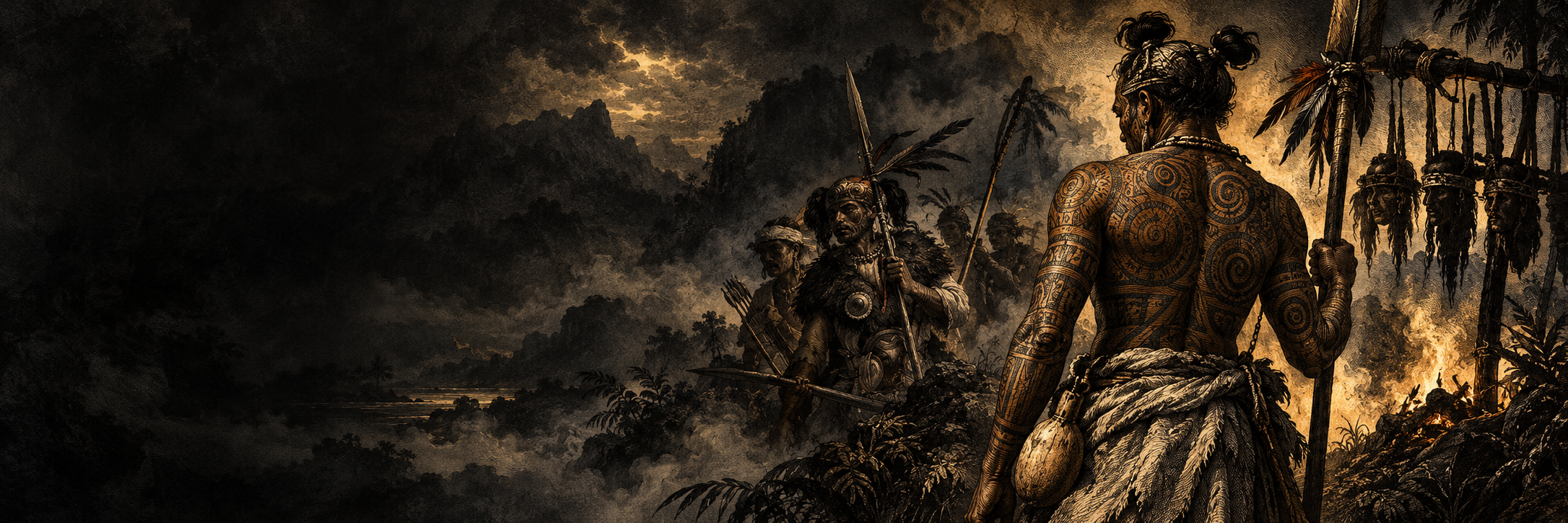
Heads taken.
Power claimed.
Headhunters were warriors who took human heads as trophies after raids or battles. Across different societies, a head could signal victory, revenge or power. These eight images take us from the Pacific and Borneo to Africa and an artist’s vision of ancient Scotland. The scenes are striking, but the stories behind them are not all the same.
On Nuku Hiva in the Marquesas, a warrior carries a head trophy below a body covered in bold tattoo patterns. In Borneo, Dayak and Iban images put warriors and trophies side by side. Among some groups, success in warfare could also be marked on the hands or fingers. A tattoo might tell others what its wearer had done.
The Māori head brings the face itself into focus. Its moko survives the person who wore it. Preserved heads could be enemy trophies, but they could also belong to loved ones. Later, demand from overseas collectors fuelled a destructive trade. A tattooed face became something people were prepared to kill for.
The Dahomey scene shows women warriors raising heads in battle; the Solomon Islands image places skulls on poles. An Australian figure lifts a head above his own. Together, these pictures show how widely the image of the head trophy travelled. They do not prove that every society followed the same custom. The colourful Pict is especially revealing: it was made long after the Pictish period, showing how later artists imagined a fearsome ancient warrior.