 MUNDURUCU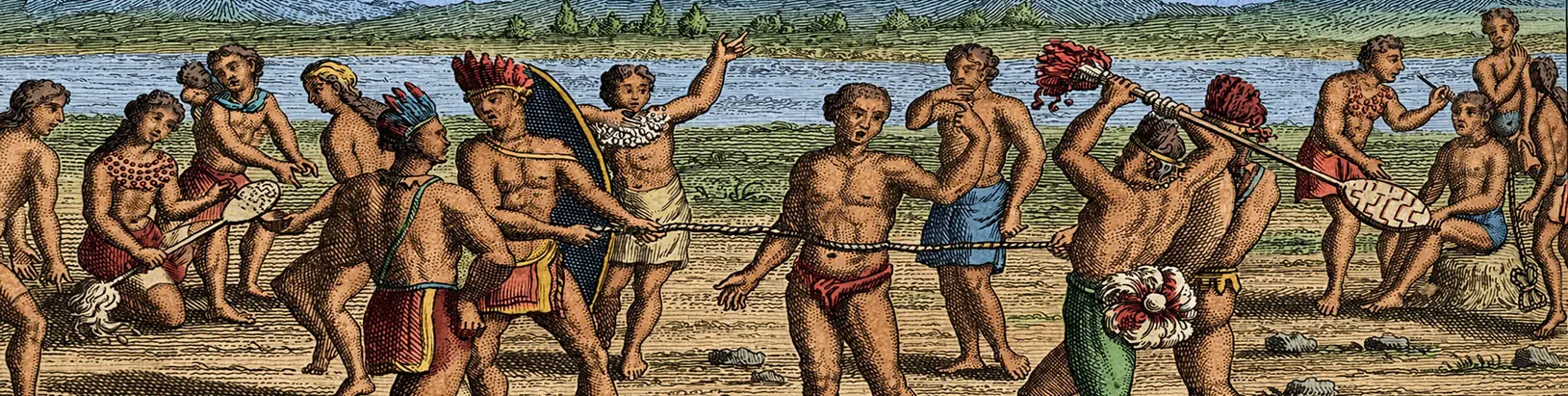
In the sixteenth century, Tupinamba communities occupy extensive stretches of Brazil’s Atlantic coast. European visitors, including Hans Staden, describe warfare, the captivity of enemies and ritual cannibalism. Their accounts inspire some of the best-known historical images of Indigenous Brazil.
In Staden’s account, a prisoner may live among the community and be fed and cared for before the appointed ceremony. Women prepare the captive and the wooden execution club, the ibirapema. A memorable detail is that both the prisoner’s face and the club are painted in a similar manner, while women sing around them.
The captive is restrained and publicly killed with a blow from the club. The body is then divided and prepared for a communal ritual meal. Women play prominent roles in these preparations. These ceremonies are connected with warfare, vengeance and collective memory; the familiar European image of a frenzied feast obscures that ritual setting.