 MUNDURUCU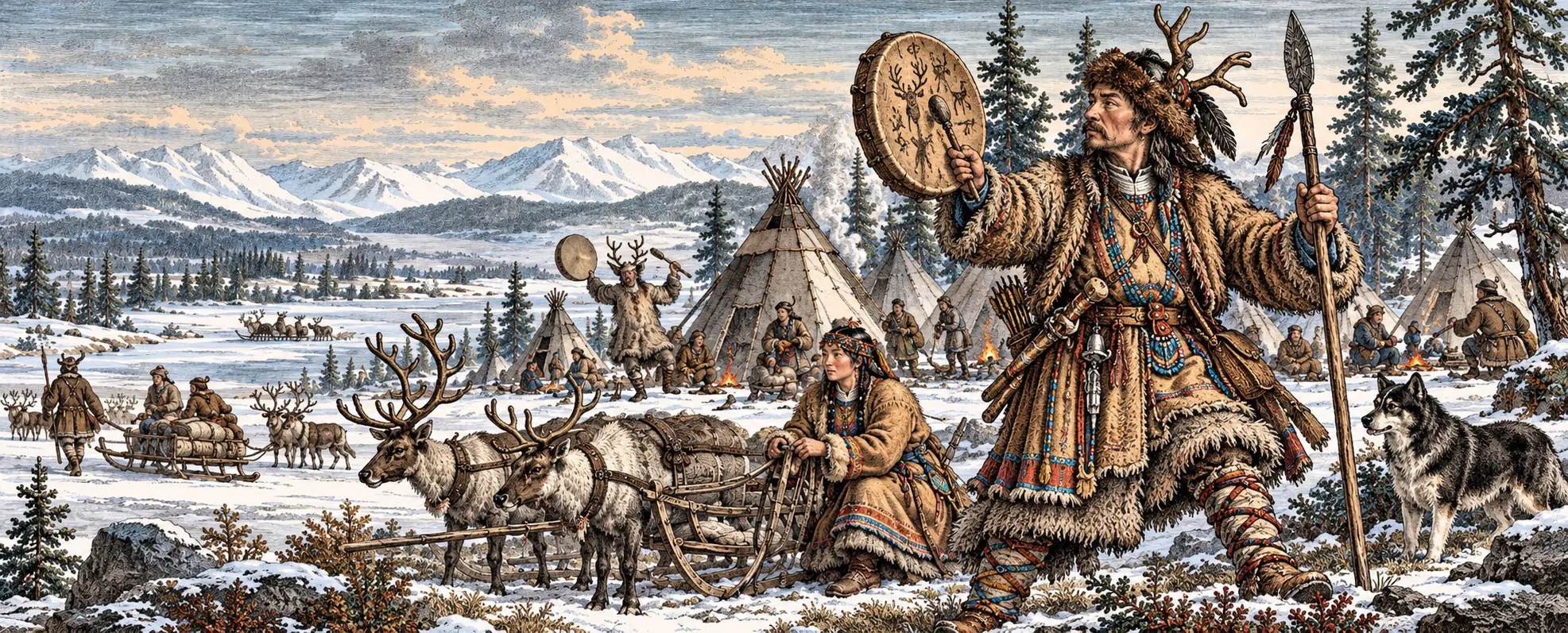
In the 1690s, Evert Ysbrants Ides travels across Siberia as an envoy of Peter the Great on his way to Beijing. His account introduces European readers to communities then described as Tungus, a historical name associated especially with the Evenki and related Tungusic peoples.
Early descriptions of central Siberian facial tattooing mention three curved lines running from the corners of the mouth towards the outer corners of the eyes, rather than the chin markings familiar from some neighbouring traditions. Accounts associated with Ides’s journey describe pigment-darkened, greased thread being drawn beneath the skin to leave permanent patterns.
This skin-stitching technique turns the tools of sewing into instruments of body decoration. Across the forests of Siberia, hunting, reindeer keeping and skilled work with hides shape everyday life. Historical portraits record facial markings alongside clothing and ornaments, preserving glimpses of local traditions within a much wider Tungusic world.