 MUNDURUCU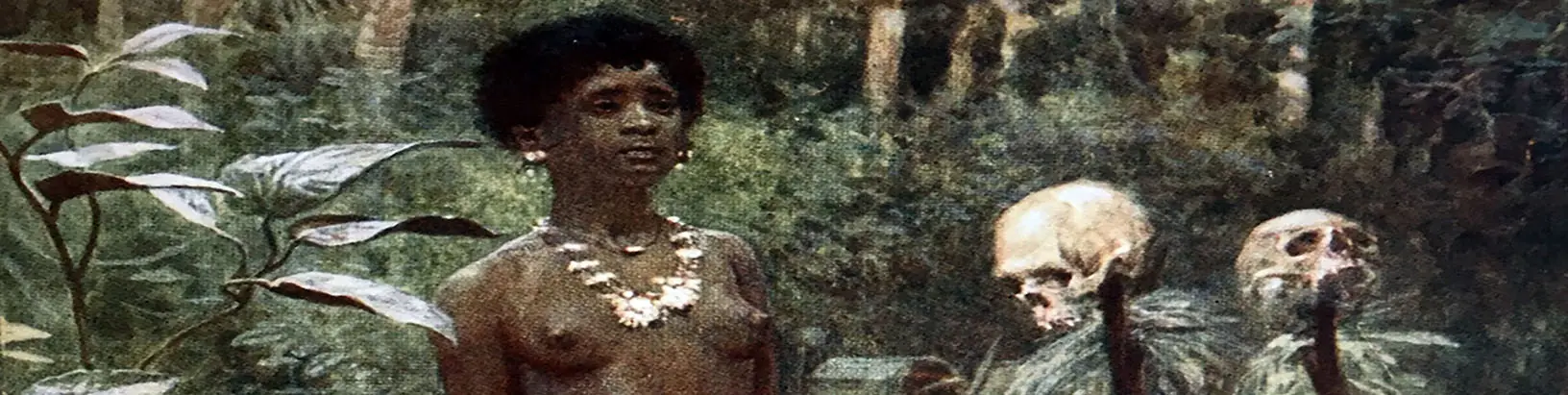
In 1568 the Spanish navigator Álvaro de Mendaña reaches the archipelago and gives it the name Islas Salomón. Later European stories of headhunting and cannibalism help give the islands a fearsome reputation, although they conceal the diversity of the communities living there.
Missionaries and other visitors record tattoos and scarification associated with identity and social standing. Their accounts and drawings preserve details of patterns worn by warriors, religious specialists and people of rank.
Christianity, trade and colonial rule bring major changes to local beliefs and customs. Some markings lose their former religious meaning or fall out of use, while other traditions adapt and continue. The images provide a record of these changing island societies.