 MUNDURUCU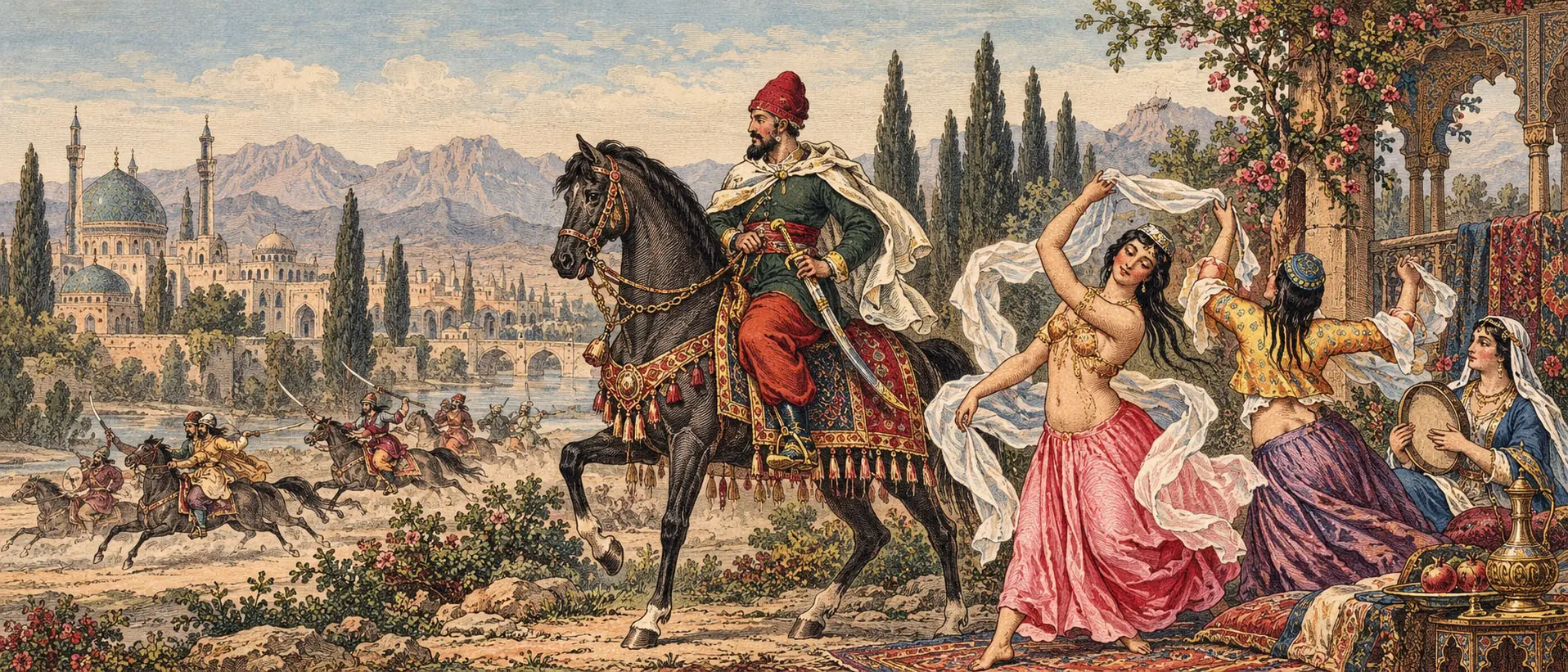
In Persia, present-day Iran, tattooing is known as khālkubi. Historical accounts describe women with floral patterns, birds, gazelles and ornamental marks on the face and body. Small tattooed beauty spots, dots between the eyebrows and designs resembling bracelets or anklets place permanent decoration alongside jewellery and cosmetics.
Tattoos also appear in Persian literature. Rumi tells of a man who asks a barber to tattoo a lion on his shoulder, only to object to the pain. The story offers a memorable glimpse of tattooing as a familiar practice rather than an exotic curiosity.
Nineteenth-century observers describe changing fashions. Jacob Polak notes a decline in decorative tattooing in the 1850s, while Percy Sykes later recalls it as formerly very widespread. By around 1900, some accounts describe it as less common among urban elites but continuing in villages and nomadic communities, particularly in southern Persia.
Such reports do not prove that everyone throughout the ancient Persian Empire was tattooed. They reveal a varied history in which decoration, protection, fashion and social standing shape the use of permanent marks.