 MUNDURUCU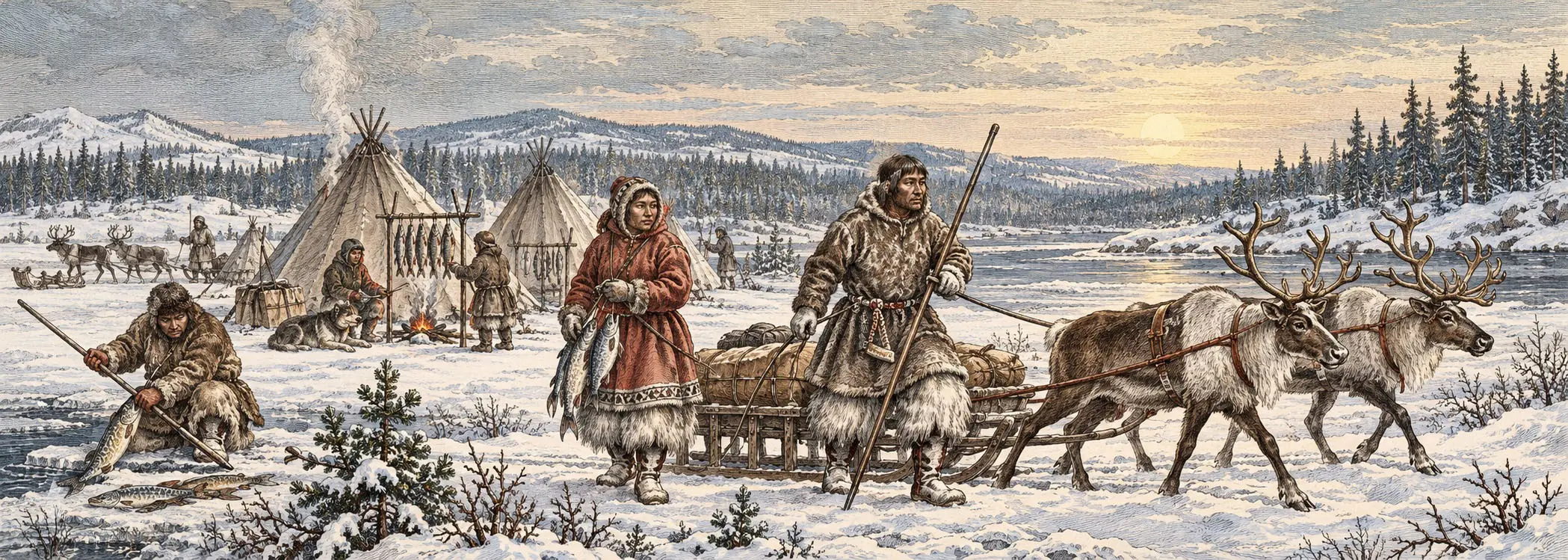
Ostyak is a historical name most commonly used for the Khanty of western Siberia, whose communities live along the Ob and its tributaries. Older writers sometimes apply the same word to other peoples, so the name in a historical caption needs to be read with care.
Fishing, hunting and, in some areas, reindeer keeping shape life along these rivers and forests. Boats, nets, hide clothing and finely worked ornaments appear in museum collections and historical illustrations, alongside records of spiritual traditions.
Nineteenth-century descriptions report tattoos on the backs of women’s hands, their forearms and the front of their thighs. Some men are described with a small mark on the wrist, functioning like a personal sign or signature. This contrast—extensive patterns for some women and a compact identifying mark for some men—is a distinctive detail preserved in early accounts.