 MUNDURUCU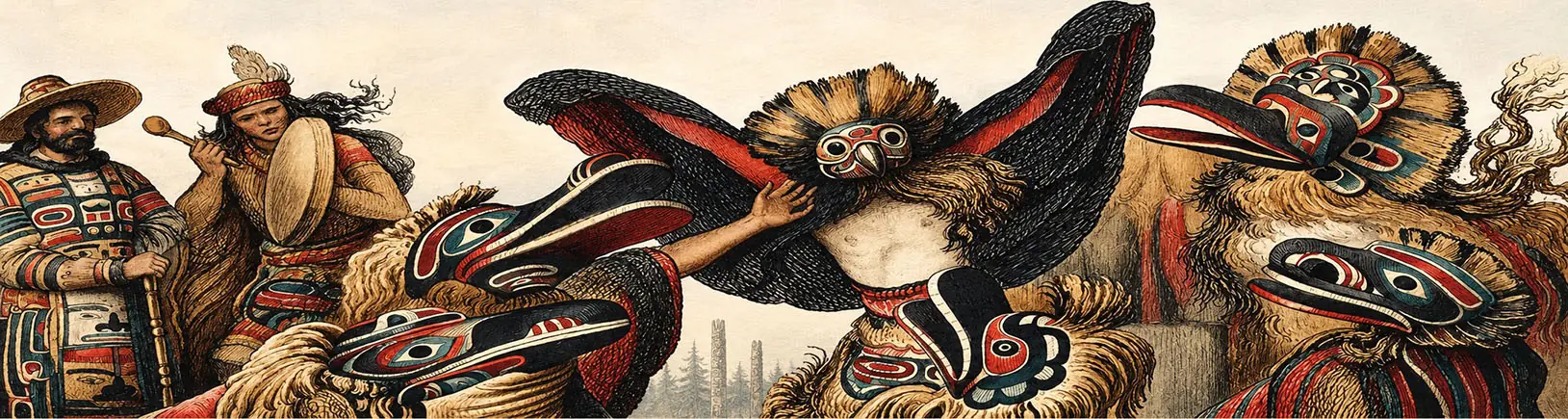
In winter, villages along the Pacific Northwest Coast become places of ceremony. Among the Kwakwaka’wakw, Nuu-chah-nulth and Nuxalk—called Kwakiutl, Nootka and Bella Coola in older sources—songs, dances and carved masks give visible form to ancestral and supernatural powers. Each nation has its own ceremonial traditions.
A dancer enters wearing a bird, bear or other spirit’s face. Movement, drumming and song bring the carving to life; some masks open to reveal another figure within. These performances transmit histories and affirm rights to names, crests and ceremonial privileges.
The Kwakwaka’wakw Hamat̓sa ceremony centres on the dangerous power of a cannibal spirit. An initiate returns from the wilderness in a wild state, and the ceremony brings that power under control. The feared being’s house in the north belongs to this ceremonial story; it is not a description of everyday village life.
Animals and supernatural beings also appear on house fronts, poles and bodies. Such images identify families and their inherited histories. Seen together, the collection’s masks, painted figures and carved buildings reveal an art inseparable from ceremony and belonging.