 MUNDURUCU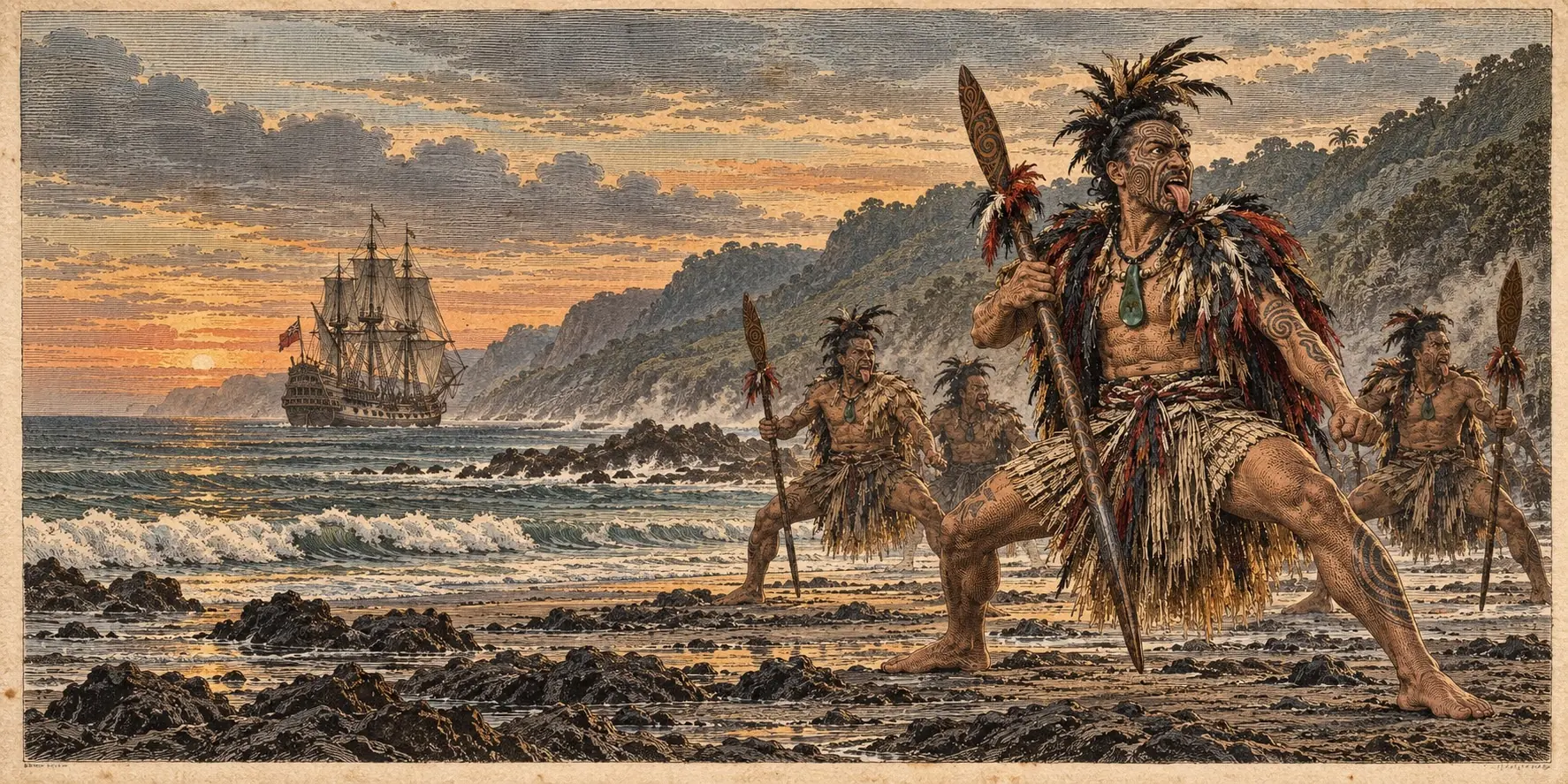
In October 1769, Captain James Cook and his companions land in New Zealand and encounter Māori warriors across a river. Brandishing weapons, the warriors perform a haka: forceful movements, fierce expressions and a powerful chant make the challenge unmistakable. Cook and his companions draw back and wait for armed marines to land before approaching again. The display has achieved its purpose: the visitors will not advance without protection.
Māori are accomplished wood carvers, decorating canoes, houses and everyday objects. Tā moko shares this rich visual language: traditional specialists use uhi, chisel-like tools, to work pigment into the skin, sometimes creating distinctive grooves. The designs express identity, ancestry and social standing.
Historical portraits show men with elaborate facial patterns and tattoos on their thighs and other parts of the body. Women’s moko often centres on the lips and chin; older accounts describe a chin pattern called wakatehe as resembling an inverted crown. Tā moko remains a living expression of Māori culture.