 MUNDURUCU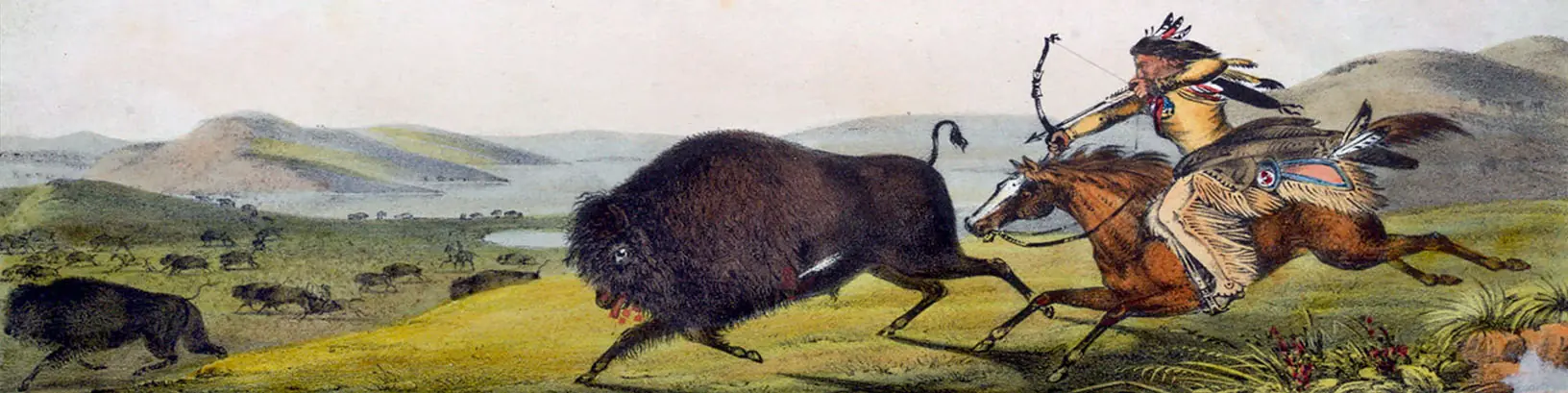
The Great Plains are North America's vast central grasslands, home to many Indigenous nations including Cheyenne, Comanche, Osage, Otoe and Omaha communities. Bison connected many of their lives, despite differences in language and ceremony.
Feathered war bonnets, tipis and ceremonial pipes became familiar through western films. Originally, they had specific uses and meanings. Feathers could recognise earned honours, while pipes accompanied prayer, diplomacy and solemn agreements.
In a Mandan buffalo dance recorded by George Catlin, dancers wore buffalo heads and imitated the animals to seek success in the hunt. Painted bodies, clothing and movement brought the ceremony to life.
From 1883, Buffalo Bill's Wild West took Plains performers before audiences in America and Europe. Their riding and other skills impressed spectators, but staged battles also helped create stereotypes later repeated in films. The original communities were much more varied than the show suggested.