 MUNDURUCU
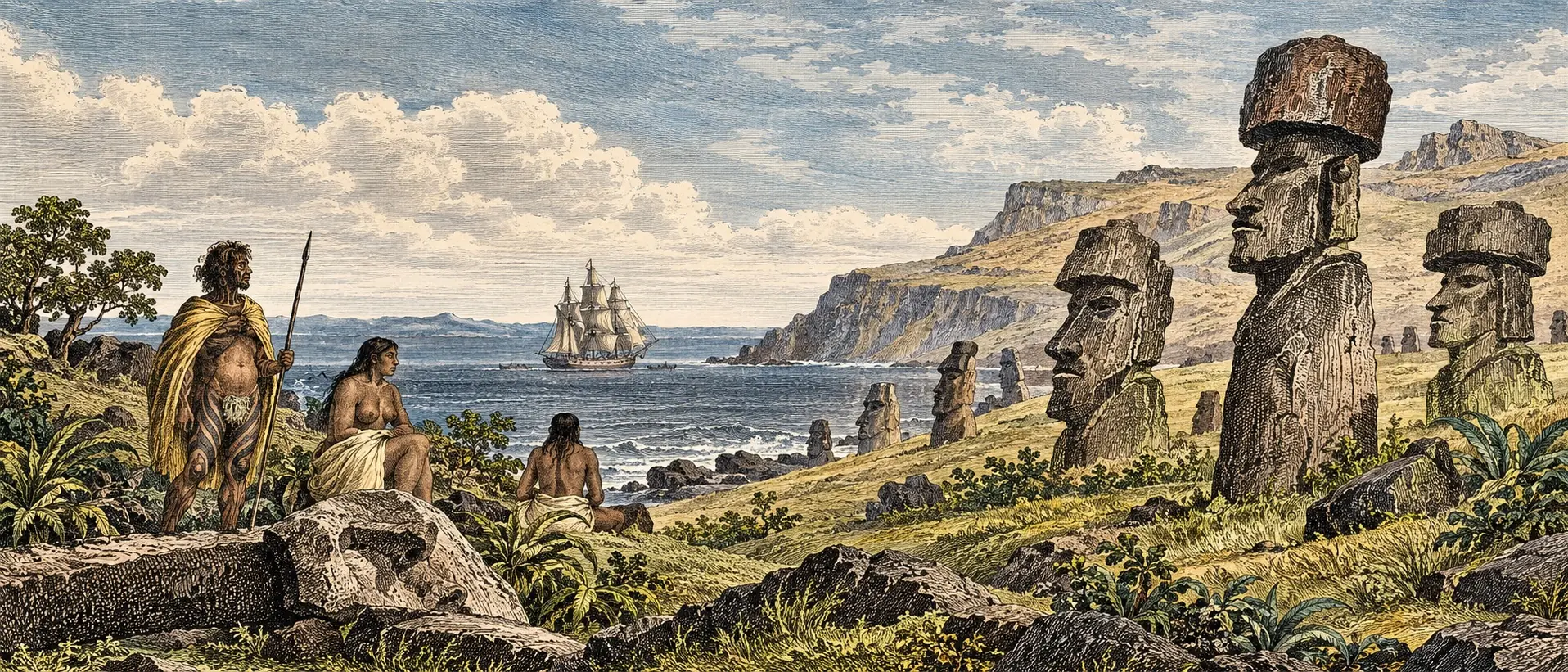
Easter Island, also called Rapa Nui, is a remote Polynesian island in the southeastern Pacific. Its people are known for monumental moai statues and a rich history of body decoration.
The island takes its English name from Easter Sunday, 5 April 1722, when Jacob Roggeveen's Dutch expedition first sighted it. Visitors noticed blue markings on the islanders' bodies as well as the enormous stone figures near the coast.
Tattoos included designs on faces and other parts of the body. Portraits show how strongly they could shape a person's appearance, alongside ornaments and carefully arranged hair.
The moai honoured important ancestors, including chiefs. Cook visited in 1774 and recorded both the extensive tattoos and the monuments. Skin and stone offered different ways to make identity and ancestry visible on this distant island.