 MUNDURUCU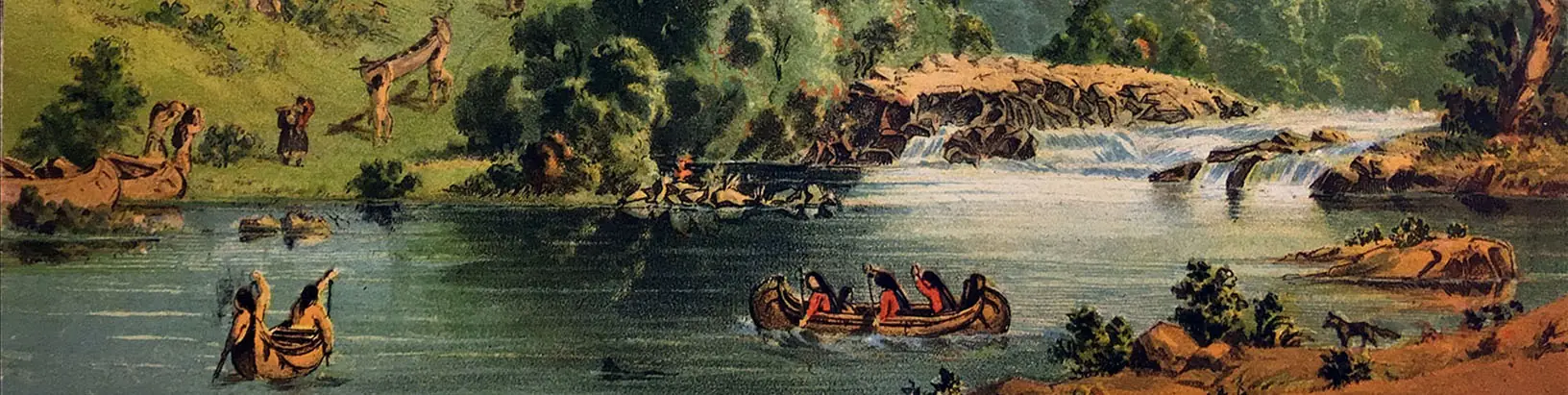
In the seventeenth century, French settlements along the St Lawrence become centres of a growing fur trade. To the south, Dutch and later English traders develop their own networks. Indigenous nations negotiate these relationships for trade and security, while European rivalries intensify existing struggles over routes and territory.
The Wendat, called Huron by the French, are important French allies and trading partners. Haudenosaunee nations build strong commercial ties with the Dutch and later the English. Epidemics and warfare devastate communities; attacks in 1648–1649 shatter the Wendat homeland, forcing survivors to disperse, join other communities or establish new settlements. The Wendat people endure.
Canoes carry furs along waterways, linking inland communities to distant ports. Historical pictures show hunters, travellers, tattooed people and ceremonial gatherings, although their European captions often simplify the identities they depict.
Cree and Anishinaabe peoples, including the Ojibwe, inhabit extensive regions of what is now Canada. Their ways of life vary with woodland, lake and grassland environments. Plains Cree communities participate in the bison-hunting world of the Great Plains, while other Cree communities live far beyond it.