 MUNDURUCU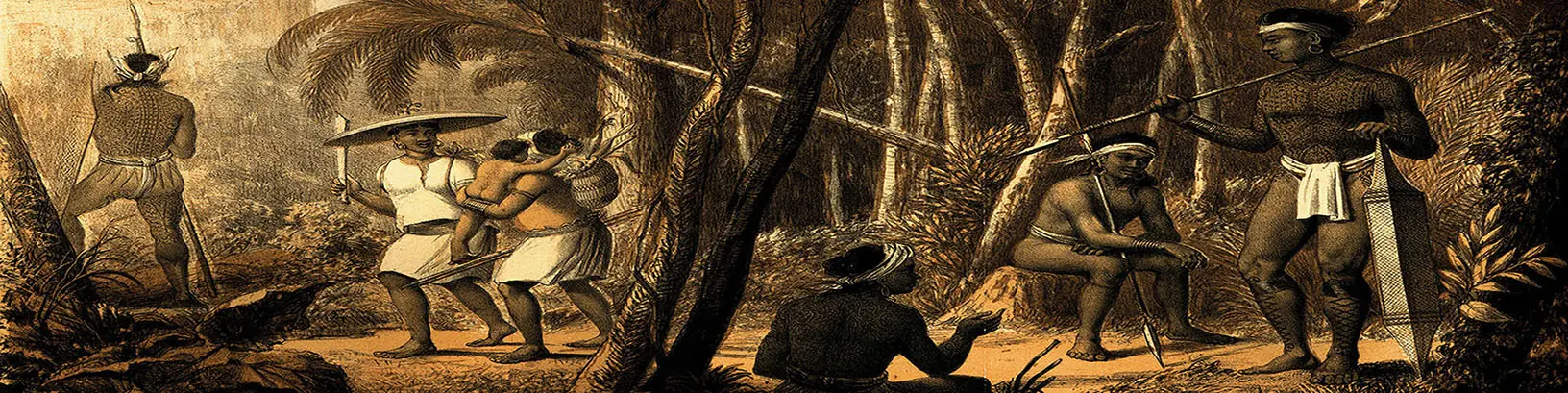
For European travellers, the forests and rivers of Borneo long make the interior difficult to reach. Reports of hostile warriors, headhunting and alleged cannibalism add to its fearsome reputation. Yet this is already an inhabited landscape of longhouses, cultivated fields and established routes, known intimately to its own communities.
Dayak is a collective name for many different peoples, not one tribe with a single set of customs. In some communities, headhunting is connected with warfare, ritual obligations and prestige. Historical accounts describe how success can enhance a young man’s standing and marriage prospects, but such practices vary across the island.
Tattoos can record achievement as well as identity. Hose and McDougall describe Kayan men earning extensive hand tattoos through taking an enemy’s head; women’s intricate designs can express social standing. These accounts reveal particular traditions, rather than making every tattoo a mark of killing.
The Iban and Kayan also develop remarkable decorative languages of curved forms, plant motifs and animal imagery. Designs are transferred or outlined and worked into the skin with tapping tools. Men and women wear different patterns, with meanings shaped by their communities and life histories. The collection brings together tattooed portraits, tattooing scenes and the wider visual world of Borneo.