 MUNDURUCU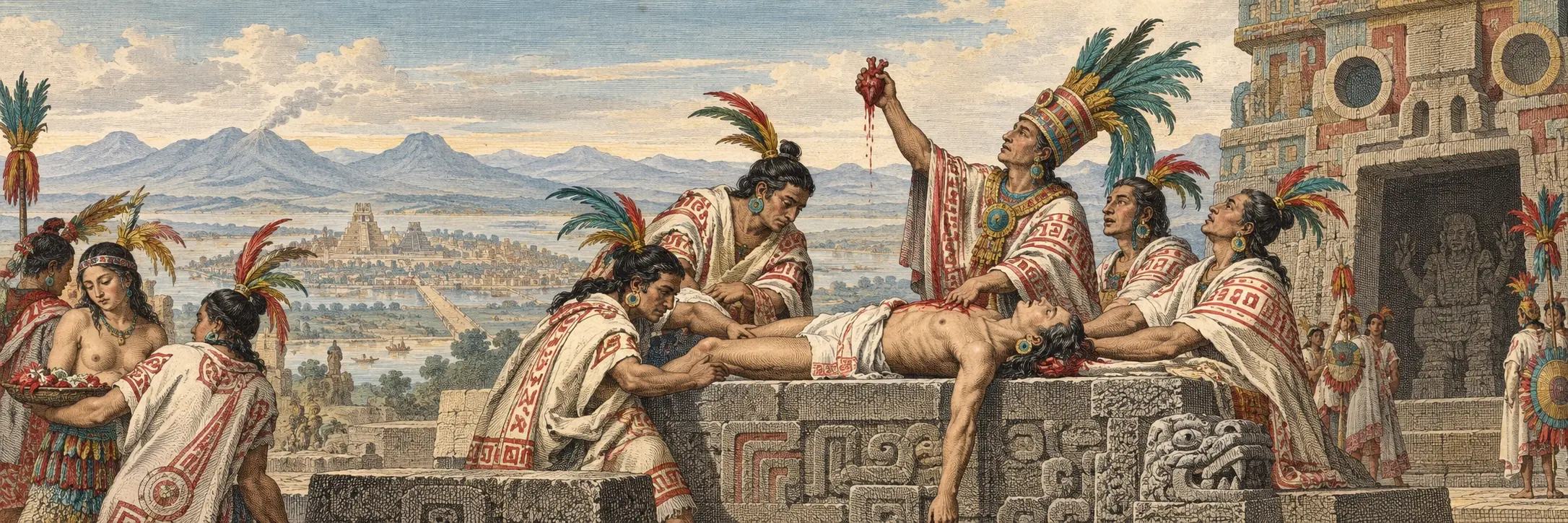
The Aztecs were peoples of central Mexico whose empire was led by the Mexica of Tenochtitlan and their allies. Dress, feathers and body ornaments made power and achievement visible.
Lip plugs were particularly striking. Inserted through a piercing below the lower lip, they could be made from different materials according to the wearer's standing. One surviving gold serpent ornament even has a tongue that moves with the body.
An ornament at the mouth was a powerful choice. The ruler's title, huey tlatoani, is often translated as 'great speaker'. Jewellery could draw attention to the person entitled to speak for others, while particular ornaments also recognised military achievement.
Human sacrifice was an important part of Aztec religion. Offerings of blood and human lives were believed to nourish the gods and keep the sun moving. In some ceremonies, priests held a victim on a sacrificial stone and removed the heart as an offering. Religion and warfare were closely connected: taking captives could supply victims for these rituals.
Fine cloth, featherwork and ceremonial clothing completed the appearance. The conquest of 1519–1521 changed this world profoundly, but its history is much larger than those events. The portraits and objects reveal impressive skill in making the body a public display of rank.